
About Us
JWU is an organization by, of, and for JPL workers who want to unionize in order to improve our working conditions. Our work not only benefits the Lab, Caltech, NASA, and the United States, but also has positive impacts worldwide. We work in many different fields and have varied experiences, but our dedication to our work unites us all.

Kim Rink, Operations Systems Engineer, 397S
I am a systems engineer that helps maintain the health and safety of the Curiosity and Perseverance rovers. I am frustrated that the current state of JPL — non-competitive salaries coupled with high cost of living, elimination of hybrid work, and stagnating opportunities for career growth — has forced many of my exceptional coworkers to leave JPL. Those of us that remain face a lack of resources and personnel that creates an unsafe environment for both the workers and the spacecraft. Through collective bargaining, we can secure rights that improve our quality of life and attract future workers. Together, we have the power to shape JPL into an institution whose workforce is treated with dignity and respect.
Erwin Joel King, Systems Integration and Test Engineer, 382C
I have been an Integration and Test Engineer for nearly a decade and I take a lot of pride in working at a one-of-a-kind place like JPL. Through my time working on various projects, I have worked with many wonderful and talented people who deserve a just and equitable work environment. I have seen the capabilities of many of my colleagues throughout my years of experience, but I understand that the changing environment is not enabling JPL’s employees, myself included, to work to the best of our abilities. I believe a union is necessary for JPL to establish the means through which the people that I hold to a high regard can achieve a workplace befitting of their contributions. I also believe that combining the strength of a union at JPL with the existing Caltech union would further the goals of the current and future science community.

Julia CrowleyFarenga, Testbed Engineer, 313X
I’m a testbed engineer in 313X and I have worked at JPL for seven years. I chose to work at JPL after interning at several private space companies because I felt that JPL wasn’t only hiring me to do a job and instead truly cared about me as a person and was invested in my success. I love working at JPL because we do such incredible, innovative work in the name of science and discovery and not just to chase a profit. However, I have recently begun to feel that JPL doesn’t care as much about its employees as it used to. JPL is becoming almost an unsustainable place at which to work due to the extremely high cost of living and more years without raises than with raises. With a union, we will have a say in our working conditions and compensation so that JPL remains a workplace people love.
Kyle Kaplan, Operations Systems Engineer, 397S
For me, JPL is a dream job. As a robotic operations systems engineer, I get to wake up every morning and work on robots that explore other worlds – what more could I ask for? But in my seven short years at the lab, I have seen a steady decline in working conditions as early career hires are expected to go above and beyond to continue to keep missions on schedule and are rarely rewarded for their sacrifices. In the rush to launch the Perseverance rover and commission its sampling system, myself and other early career team members supported frequent in-person work at the height of the COVID pandemic and consistently worked outside of regular work hours, leading to a successful sample acquisition on Mars. Since then, I have seen the social contract between lab management and workers break down as times get tough and decisions which affect employees’ lives, like layoffs and return to lab, made seemingly without logic or explanation. All this while the cost of living in Southern California gets more expensive and salaries fail to keep up, making owning a home practically unattainable for extremely talented young engineers. This is unacceptable for a laboratory that holds itself to such a high standard. We can and should, as workers, come together to convince management to do better: to react to our concerns and address our needs with open, honest communication. The only way we can create this change at JPL is through worker power, a JPL union.

Christian Smart, Cost Engineer, 2023
I work as a cost engineer developing independent estimates at milestone reviews, as well as developing and maintaining cost and risk models. When I was a college student, one of my professors said that unions are a way to change the workforce from an autocracy to a democracy. Given my experience at JPL, I believe that some democracy is needed in our workplace. I was hired as an out-of-state remote worker. One thing I was not made aware of about my remote workI was my health insurance options are much worse compared to my coworkers who live in-state. I voiced this issue to HR but got nowhere and it was brushed aside. The recent abrupt end to remote work is also a big issue. People’s concerns matter and should be received with greater attention. We need not only a voice but leverage to make JPL a better workplace for all employees. A union is the best way to achieve that goal.
Jen Pino, Education Program Specialist, 1852
In order to continue building on the legacy of JPL, a world-class institution where innovation, collaboration and scientific excellence thrive, I believe it’s time we form a union. By organizing, we can work together to ensure that all employees have the support, voice and protections they need to thrive. My priority has and always will be the JPL intern community. Losing staffing across teams who work with the interns, due to budget, policies, and inflexibility, makes my work and my coworker’s work so much harder. We need institutional knowledge on these teams in order to create a world-class welcoming experience for our students. I believe a union would help reinforce a healthy work-life balance, improve morale across the lab, and foster an even stronger sense of community. This in turn enhances our ability to share bold ideas, collaborate more effectively, and innovate fearlessly. Forming a union is a step toward making JPL not just a place where incredible things happen, but where people feel respected, inspired, and empowered to do their best work together.

Tom Moline, Systems Engineer, 394C
As a NISAR mission planning engineer, I care deeply about JPL’s core mission of advancing humanity’s understanding of our world, solar system, and universe. This mission is the reason I and many others joined JPL in the first place. With looming threats to government funding for all science missions, I am worried that JPL will detract from this mission by shifting its focus to defense and other non-science work, doing so without input from the workers who make it possible. For mission planners such as myself, this would mean having to shift from plans meant to help to those that are meant to hurt. This is why I am a part of JPL Workers United, so we as workers can have a meaningful voice to advocate for the types of missions that we want to work on, actively shaping and strengthening JPL’s core mission in the process.

Margie Homer, Technologist, 353E
I am a senior technologist and physical chemist with over 30 years of sensor and instrument development experience at JPL. Over the years I have worked in three different divisions, on many different instrument teams, and participated in affinity groups and intramural sports. The community and connections I’ve built between co-workers and teammates has been part of the most important work experiences I’ve had at JPL. As we all look to the future of JPL, these communities need a strong voice in planning for JPL’s future. The February 2024 layoffs were heartbreaking for me. Before the layoffs my group was almost half women and after the layoffs I was the only woman left in the group. It was like being sent back to the 1990s when I first joined the lab. People who had secured funding were laid off which was something I had never seen at the lab before. The process felt more capricious than thoughtful. A union would provide the workers at JPL with a voice at the table and input into decisions that affect us all; too often JPL management ignores or silences our voice. I would like to see a union contract that provides for third party mediation rather than relying on resources that are at the complete discretion of JPL management.

Ian Luczon, Quality Assurance Engineer, 5126
I was denied medical accommodation with a brief written note that offered no individualized analysis and ignored the new California state protections, so I filed an appeal. Even though I presented a clear, evidence-based case, I was met with silence for a month and a half, which caused unnecessary distress and worsened my condition. The process felt designed to wear down the person in need. Instead of working to keep me included, the silence made it feel like JPL was hoping I would walk away. By forming JWU-UAW, JPLers can negotiate for a fair, timely medical accommodation process that centers our needs. Nobody should be forced to choose between their health and their job.

Stephanie Mitana, Mechanical Engineer, 352F
I rely on public transit to get to work and JPL had always been very accommodating. They had set up the Gold Line shuttle to add additional service times on top of the existing Metro bus and even offered a $50 reimbursement for Metro passes. When the Pandemic hit and we went into lockdown, JPL stopped running the Gold Line shuttle at the same time Metro discontinued the 177 route that ran between Pasadena and Lab. This was abrupt and though this halt made sense, I asked for a solution and nothing was given. An opportunity that I had been working towards for over a year had to be handed off to another engineer not because I wasn’t willing to go into Lab during lockdown, but because my ability to get to Lab was taken away without any alternatives or assistance provided. When a different project requested that I come in to support critical work, I had to pay $20-30 out of pocket for Lyft each way. This experience made me realize that the benefits/services we take for granted can be stripped away at any given time without alternative solutions to accommodate our needs. I support forming a union because I believe all employees should have the right to the necessities needed to perform their jobs. This goes beyond the tools or software to do our jobs technically, and includes all things needed for us to “show up” each day, such as public transit (or parking for the car driving folks), remote work options, access to childcare and a safe, inclusive work environment. Too often these are viewed as “perks” or “benefits” when in reality, one cannot do their work and grow in their career without them. I think it is essential for us to fight for these rights so we can continue to do the work that we love doing at JPL.
David Lockman, Enterprise Applications Software Engineer, 193G
Since 2014, I’ve worked as a database administrator and provided database services to a variety of projects and teams at JPL. I’m fortunate to work with so many enormously brilliant engineers and scientists who are passionate about the projects they work on. But I hear the frustration they are experiencing on many issues – RTO, budget cuts, layoffs – and their desire for transparency and a voice in those decisions. I know remote employees who, having made so many positive contributions to institutional services and projects, are now forced to make a very hard choice – look for another job or return to the Lab and an uncertain future. I’ve seen a palpable drop in morale. Having so many coworkers who are uncertain about the future of the technical services they support, I want to be able to have a positive impact on their working environment. A union is the most obvious way to give JPLers a chance to influence the working environment at the Lab and achieve what we all want – success for JPL.
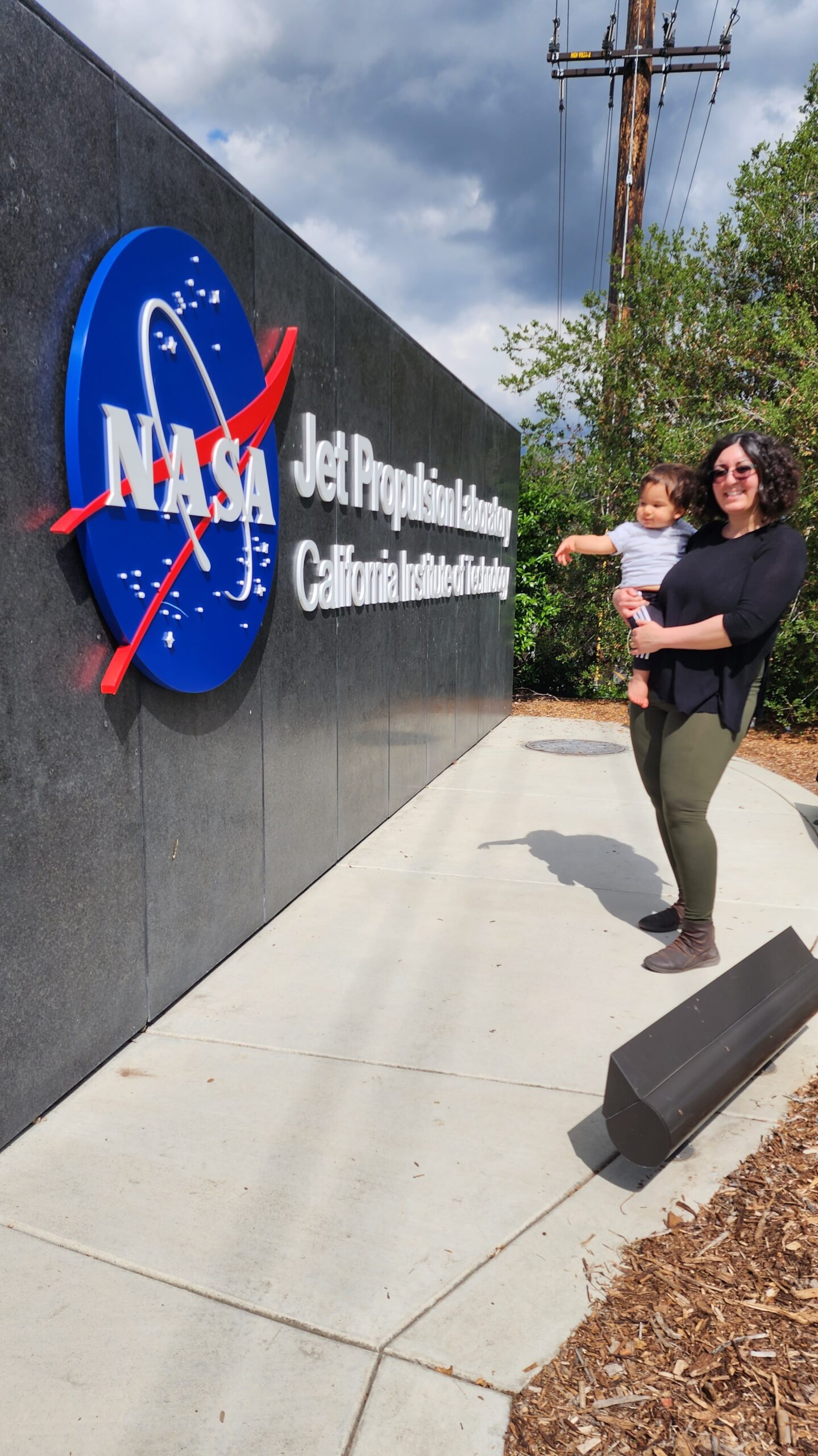
Mary Lou Dorgalli, Travel Accountant, 2135
Working at JPL for over seven years has given me the opportunity to collaborate with many incredible teams. What’s always stood out is the passion and shared sense of purpose my coworkers bring to advancing science and space exploration. Because Travel Accounting has been fully remote since before the pandemic, I’ve been able to remain remote, which has allowed me to care for my health while being the cancer caregiver and mother my family depends on. However, recent layoffs, the removal of DEI programs, and return-to-office mandates have deeply affected morale and many of the colleagues who helped shape JPL’s culture. The lack of transparency has forced me to set aside professional goals and even pause my MBA program out of concern for work-life balance, health, and financial stability. I’ve seen how effective and dedicated remote employees can be, and how much I’ve grown through challenges that could have otherwise broken me. A union would help ensure every voice is heard and that JPL’s future is built with fairness, transparency, and respect for the people who make it exceptional.

Federico Rossi, Robotics Technologist, 347N
I support JWU because I love my job, and I love JPL. JPL is made by its people – the techs who can diagnose a faulty pin from 20 feet away, the operators who know Gale Crater like their backyard, the scientists who tell us stories of past rivers and present geysers, the engineers who turn dreams into CAD models into CNCd aluminum and wiring harnesses and flight software. As a robotics engineer and the multiagent autonomy lead on CADRE I’ve had the pleasure to work with these and many other workers. We workers are JPL – and yet often lab management seems to think that we are replaceable cogs, whether it is through layoffs that do not even consult our projects (my CADRE team lost almost half its members to layoffs and hiring freezes – we were able to recall some essential folks, but some then left anyway because of lack of job security), or by dictating draconian return-to-office policies with no regard for the cost to JPLers, or to missions. A union will give us a seat at the table, and ensure that our voices and needs are heard – which will make JPL (i.e., us!) stronger and better positioned for the next hundred years of exploration.

Aziz Wong, Thermal Engineer, 353F
The layoffs, return to lab policy, and lack of clear communication has made it clear that JPL’s management does not value or respect its employees. JPL’s institutional knowledge, and collaborative culture come from its people. All this knowledge and experience is not easily replaceable, yet the lab continues to let people go without plans for knowledge transfer. I had team members laid off who were integral to testing campaigns and mission operations, which led to major disorganization and inefficiencies as remaining employees were left to fill in the gaps. In my case, training new members to replace those who had left or been laid off took 8 months and reduced the amount of work we could get done in the meantime. JPL needs management that will work for its people. A union contract can ensure that employees are respected and our voices are heard. A union could make knowledge transfer in the event of layoffs easier with programs like deferred resignation, and more transparency into the lab’s future workforce plans.

Tyler Dawson, Mission Planner, 394C
I’m a mission planner in 394C, proud to have supported missions across NASA from SAGE III/ISS to SOFIA, and now Europa Clipper. I work with many brilliant, compassionate people who care deeply about our work and its impact. Unfortunately, many of my coworkers have been forced to leave JPL after years of canceled and delayed ASRs, unpredictable telework policies, and anxiety about layoffs. Unionizing allows us to stand with our fellow workers to secure a lab we deserve: fair pay, remote work flexibility, family leave, and protection from discrimination. A union contract gives us the legal backing to protect each other from shifting leadership priorities. We deserve stability, respect, and a voice in our workplace. When we’re organized, we can hold JPL to the values it claims to stand for.

Lea Harris, Structural Engineer, 352G
I’m deeply motivated by our work and shared mission to ‘dare greatly.’ However…the persistent uncertainty of funding and job security creates a stressful environment for making life decisions, as well as being difficult to maintain a positive attitude and focus with the waning morale. Through JWU-UAW, we could use our collective voice to advocate for vital state and federal funding to support the long-term stability of the lab’s critical space and science missions. Additionally, we could bargain for better benefits and flexible remote work, as well as ensure equitable compensation and role clarity for those who remain on-site or take on new tasks.

Scott Cranfill, Enterprise Applications Software Engineer, 1873
I’m a software engineer that works on jpl.nasa.gov, JPL Space, other internal websites, and science.nasa.gov. I also work fully remotely from my home in Rochester, NY. I’ve been in a union before and seen first-hand how a good union can improve the lives of its members, and I want that support for my fellow JPLers. At my previous job, the union helped to uncover discriminatory pay practices by the employer and forced management to implement a multi-year effort to make paysetting equitable. The current system at JPL leaves far too much up to the discretion of line management and HR, and we deserve more transparent (and thus more equitable) policies.

Leo Cheng, Systems Engineer, 393E
My name is Leo Cheng. I started at JPL in 1992. Growing up on the pacific island of Guam, I was inspired by the Voyager missions. After getting my degrees in physics, it was a dream come true to land a job at JPL supporting the Galileo mission, which was a follow up to the Voyager missions. The same missions that inspired me to study science in the first place. Since then, I have worked on many jobs in the mission operations area. Currently, I am a real-time operations engineer, also called “ACE” for Psyche and Europa Clipper. Additionally, I am the lead for the Multi-mission Activity Planning Team.This is a critical role coordinating all JPL infrastructure maintenance activities.I feel the balance of power between management and workers at JPL has skewed one-sided in favor of management over the last several years. The recent return to lab mandate is a perfect example of management making a decision with no input from the workers. Watching so many of my talented colleagues leave JPL, I can’t help but think this has damaged JPL in the long run. This shows how a management-worker imbalance can lead to damaging the institution of JPL, let alone hurt the wonderful worker culture we have. The best way to stop this imbalance is for workers to unite. By forming a union, we, the workers, will have a voice in preserving the work-culture we love, and hopefully help shape JPL’s future.
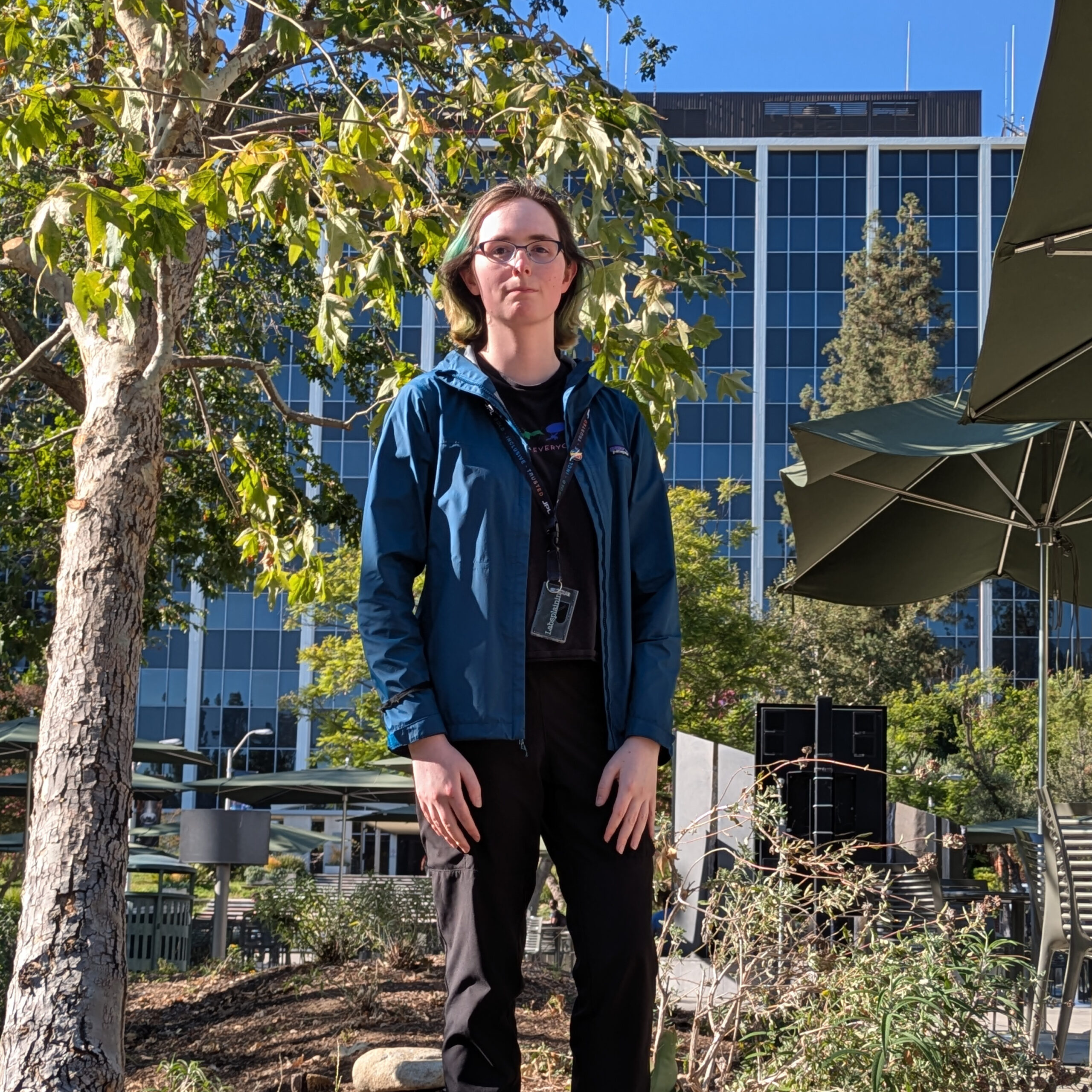
Cel Skeggs, Flight Software Engineer, 348D
Why did Psyche slip its launch date? Why was Mars Sample Return reassessed, resulting in mass layoffs? My role as a CogE for a greenfield flight software product on MSR gives me cross-cutting insight, from wires and lines of code up through institutional engineering strategy. I observe that our dysfunction is not a matter of personnel nor dedication; rather, JPL’s structure and practices restrict the flow of knowledge, preventing workers and management from making their best decisions. Engage JPL and the rearchitecture brainstorming proved we can integrate our knowledge to make real improvement at the lab, but one-off events are not enough. We need persistent information feedback loops that decision-makers cannot dismiss when the work gets tough. The responsibility to repair JPL falls to us. If we stand united, we can require our leaders to justify decisions that impact our missions and our lives, and we can demand resolution for the errors we cannot accept.
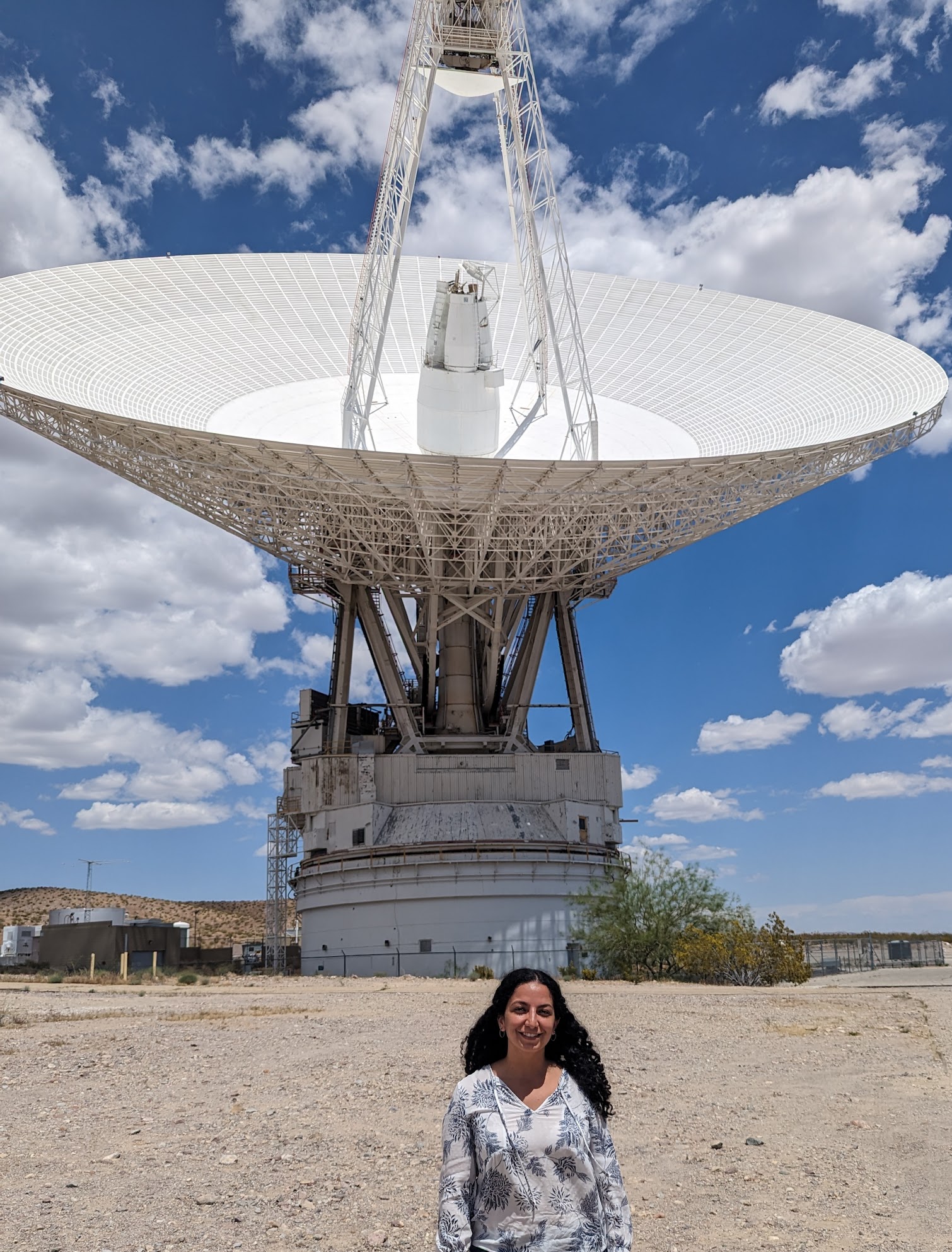
Sirina Nabhan, Systems Engineer, 393A
I work as a systems engineer and my work on Lab is focused on translating mission requirements to DSN configurations. Many JPLers, including myself, can envision themselves investing their entire career in the Lab. I care about what I have built through my community on Lab and want to protect it. Although the return-to-work policy does not impact me it will affect the work I do. Many of my most knowledgeable teammates are forced into retirement or will leave. This creates a huge gap of knowledge and an unsustainable workload that could have been avoided without this hasty policy change. I am confident that our union would represent us because I am surrounded by workers who are leaders, advocates and valuable parts of our community.

Camden Miller, Robotics Systems Engineer, 347R
I am a systems engineer and I have been operating rovers on Mars at JPL for 8 years now. External forces such as the pandemic and budget uncertainty have led leadership to make significant changes at JPL. The layoff process was uniquely opaque for the industry and layoffs were decided using metrics that had nothing to do with how effectively we do our work. I saw many excellent people get laid off, many of which will never return to JPL after their experience. Some important work is simply not getting done now due to loss of knowledge which has made for a more stressful work environment for those who remain. The lack of transparency and seemingly inhumane decision making by leadership has eroded the community that made JPL a great place to work, making it feel a bit more lonely than before. Collective bargaining would give us power where we currently have none. We, JPL workers, can influence wide-reaching decisions and work to make JPL a place we want to stay at. JPL is going to continue to face big challenges that will require more changes. This is our chance to get a seat at the table and have a voice over the tough calls ahead.

Joanne Lavin, Cost Engineer, 2510
As a cost engineer, I work as the cost lead on proposals for new projects, helping JPL obtain future work. I support unionizing because a union would give JPL employees a collective voice that we otherwise do not have. A recent example of a major decision made at JPL without any input from employees was the abrupt abolishment of teleworking. Because of this decision, my group will be losing the expertise of a full-time remote employee who has decided to retire rather than return to the lab. Several others currently on general telework have very long commutes and will experience significant hardship due to the decision. Although many people imagine that unions are primarily for blue collar or hourly workers, in fact, many professionals are unionized, and it is time for JPL employees to consider doing the same.

Raymond Francis, Operations Systems Engineer, 397D
I work in science and instrument operations for both Mars rovers, and do research in robotic autonomy. I’ve helped make smart spacecraft work better by leveraging their understanding of their own situation and giving them agency to share in decisions about what they will do.
A union at JPL would give us a voice in our own working conditions and the policies we work under, and would draw on some of the smartest and most innovative people in the world when advising on policies and advancing improvements. My own experience as a foreign national employee at JPL, welcomed and valued by my colleagues but often excluded and hindered by lab policies, even beyond what was required by law, convinced me that the institutional structures alone aren’t enough to support all workers. The workplace benefits we have now, from flexible hours and health insurance to paid parental leave, will be safer if they’re codified in a collective-bargained contract. And other rights can and should be solidified, or won – like protections for off-lab political speech and action, which is ever more important today, and recently won by other unionized workers, including at Caltech.
We, the workers of JPL, are what make this lab what it is, and we’re far more intelligent than any autonomous spacecraft. It’s time decisions about how we work are made by us and with us, not made for us without our voice.

Tatiana Bocanegra-Bahamon, Scientist, 3620
As a research scientist, I’m facing growing financial strain in an ever more expensive city, while job security, funding prospects, and even work flexibility have all declined when compared to just a couple of years ago. I once believed a permanent position in science meant professional fulfillment and stability, however, the current situation is deeply disheartening: salary and hiring freezes, mandatory return-to-office policy, consecutive rounds of layoffs, and limitations to our intellectual and individual freedoms have created an atmosphere of uncertainty and collective burnout. I support the formation of a union because there is an institutional wall between upper management and employees. Our views on the working conditions that directly shape our daily lives are not being taken into account. It is our work that makes JPL the place it is, and we deserve a meaningful voice in decisions that affect us.

Marty Brennan, Systems Engineer, 325C
I’ve worked on the Cassini, Juno, and Europa Clipper missions to help plan their science campaigns and engineering activities. In order to accomplish these difficult spacecraft missions, it is important for the entire team to be coordinated, especially when responding to changes. The changes and uncertainty thrust upon JPL from the federal administration are too much for just the few in JPL management to bolster against. I’ve felt helpless in the turmoil of the past year. Now I want to take more ownership of JPL’s future and with a union we can all have an active role in guiding JPL to a better place together.

Aaron Plave, Operations Systems Engineer, 397S
JPL used to feel like a family. I trusted the institution to protect its employees, for it to trust us, and to foster a welcoming and stable workplace. That trust was betrayed by poorly managed, indiscriminate layoffs that decimated institutional knowledge, and whose lack of communication showed an indifference to the workers. The return to office mandate will force myself and others to resign from JPL, making it a third, unofficial layoff with no severance. Moving back to an expensive area with another layoff on the horizon makes RTO infeasible. I believe it is time for employees to stand up for ourselves and form a union to protect what makes JPL such a special place – its people. I want all JPLers to have a voice in how the lab makes decisions on our behalf in matters such as layoffs, benefits, and telework. The return to lab mandate may force me to leave the lab, but it is my hope that this union can give a voice to all the other JPLers who are able to continue on.

Alex Davis, Systems Engineer, 312A
I’m a systems engineer in mission formulation and have worked on concepts for Planetary Science, Astronomy, and Earth science directorates. In the five years that I’ve worked at JPL, I’ve watched coworkers pull multiple 24-hour testbed shifts in a week, have their requests for medical accommodations go ignored, and delay their honeymoons and other significant life events for years to meet project deadline after project deadline. At the same time I’ve taken part in proposal costing reviews where JPL leadership responds to serious schedule and workforce concerns raised by group supervisors by suggesting they lean in and take planning risks for the institution. The through line I see in all this is leadership and decision making that fails to account for employee success because we don’t have a seat at the table. A historically successful way to solve this problem is by forming a union. A JPL worker’s union will help us negotiate boundaries that ensure successful missions, realistic project scheduling, and accommodations for employee needs. By standing together we can make JPL a more sustainable place to work.

Ocean McIntyre, Staff Assistant, 4020
JPL does amazing things, but it’s because the Lab is composed of so many amazing individuals working together. Sadly, that togetherness hasn’t extended to how the Lab works with us and in recent years, the leadership has become more and more disconnected with the workforce – making decisions with little to no consideration of the worker. Unions are the backbone of fair work, not just in this country, but around the world. The creation of a union at JPL would facilitate a formal avenue of communication between the leadership and the workforce for the betterment of all of us. It would require JPL to work with our union leaders – colleagues WE choose to represent US – to negotiate our working conditions and to require the communication of contracts and changes that could potentially impact us. As a disabled (blind) worker who is the sole parent of a disabled adult child, I see just how little the leadership of JPL actually takes workers’ needs into consideration. The RTO mandate was a clear reflection of that. Unionizing allows us the best chance for fair and equitable treatment, and for each of us to have a say in what happens to our future. I encourage you to stand with us today to create a better JPL of tomorrow.
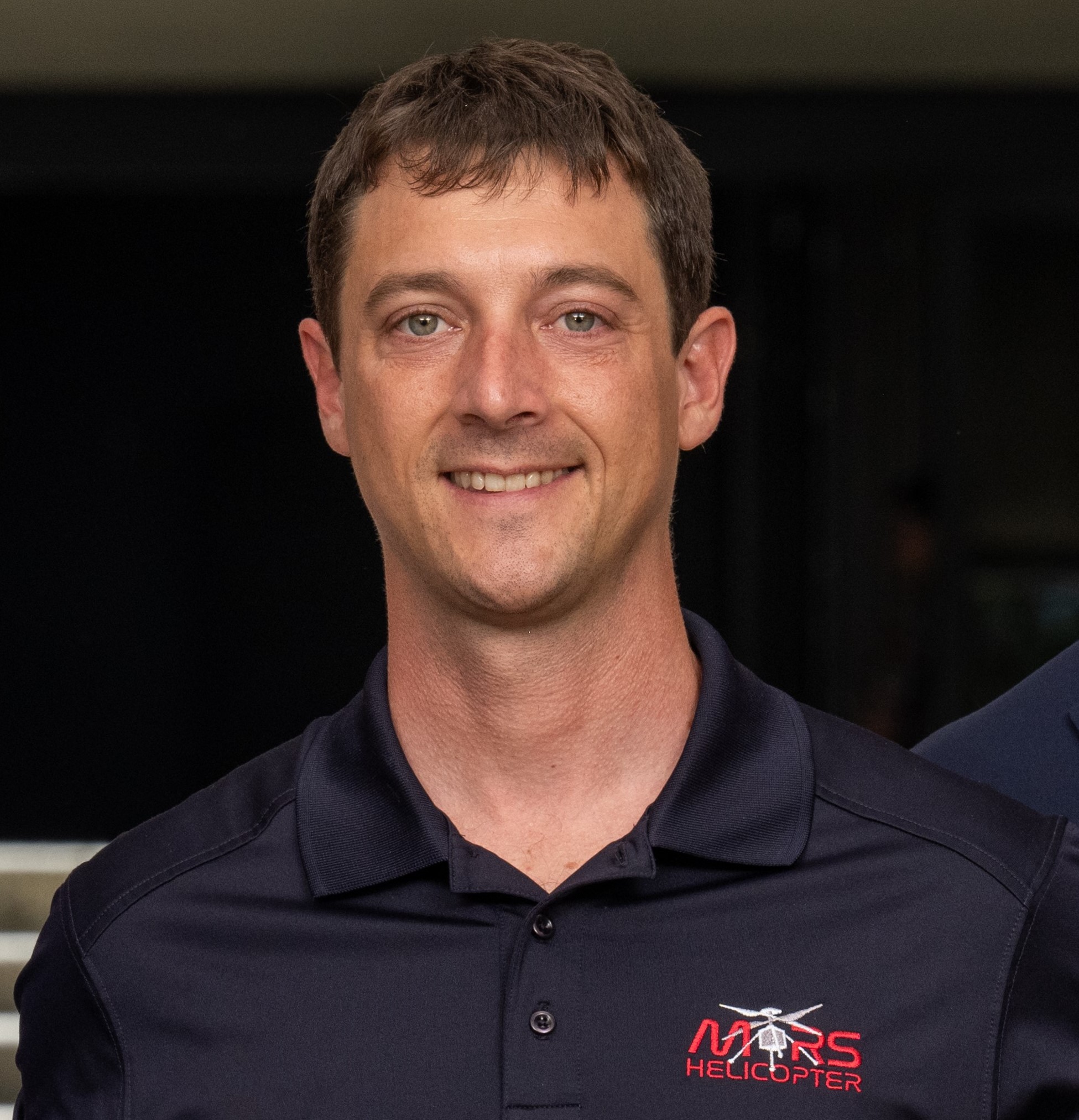
Aaron Curtis, Software Systems Engineer, 397P
I joined JPL in 2016 to build the world’s first ice climbing robot and operate it inside glaciers on active volcanoes. Nine dream-job years later, I drive Curiosity and lead software teams for Perseverance and JPL Open Repository. Recent developments made it clear to me that JPL’s workers must come together democratically and guide the institution if we are to remain Bold, Inclusive, Trusted, and solvent. I see the extreme return-to-onsite-work policy forcing out brilliant, dedicated colleagues. Since 2020, the Curiosity operations team has proven that telework freedom leads to a flourishing, cohesive, team and to the best possible science return. Banning our carefully optimized hybrid paradigm threatens rover operations. With a union, we can earn a seat at the table — perhaps with enough collective power, even a literal one on the Executive Council — and help JPL be successful while adhering to evidence-based policies and ethical principles in the face of erratic political winds.

Miles Harber, Mechanical Engineer, 5134
I support forming a union because it allows JPLers as a workforce to have more control over our quality of life on and off the lab. We contribute so much of our time and energy to JPL projects, and deserve to be able to make sure those resources are spent in an environment that is accessible, fair, and equitable for all JPL workers.Through collective bargaining, JPL workers could have a voice over career development and important benefits such as workplace flexibility and parental leave.

Kathryn Yu, Engineering Applications Software Engineer, 192G
I’ve been working at JPL as a software developer for over ten years. I’ve worked mostly on Mars missions, but I have worked briefly in Earth science, and I absolutely want that to continue. I’m also fully remote, and I believe this is incredibly helpful to many JPL-ers. The ability to work from home has been vital to my own work. I recently had surgery for a chronic condition which results in painful episodes. Being able to take the time and space to mitigate those issues from home lets me have the energy I need to perform efficiently at work. I’ve also served on the board of the Asian American Council, an Employee Resource group. Our ERG worked hard to add a correction to the JPL Founder’s Plaque as a testament to our history and our commitment to move forward while admitting to our mistakes. I want to work at a JPL that’s welcoming and diverse that clearly cares for its employees, and I believe that the best way to do this is by forming a union with my coworkers.
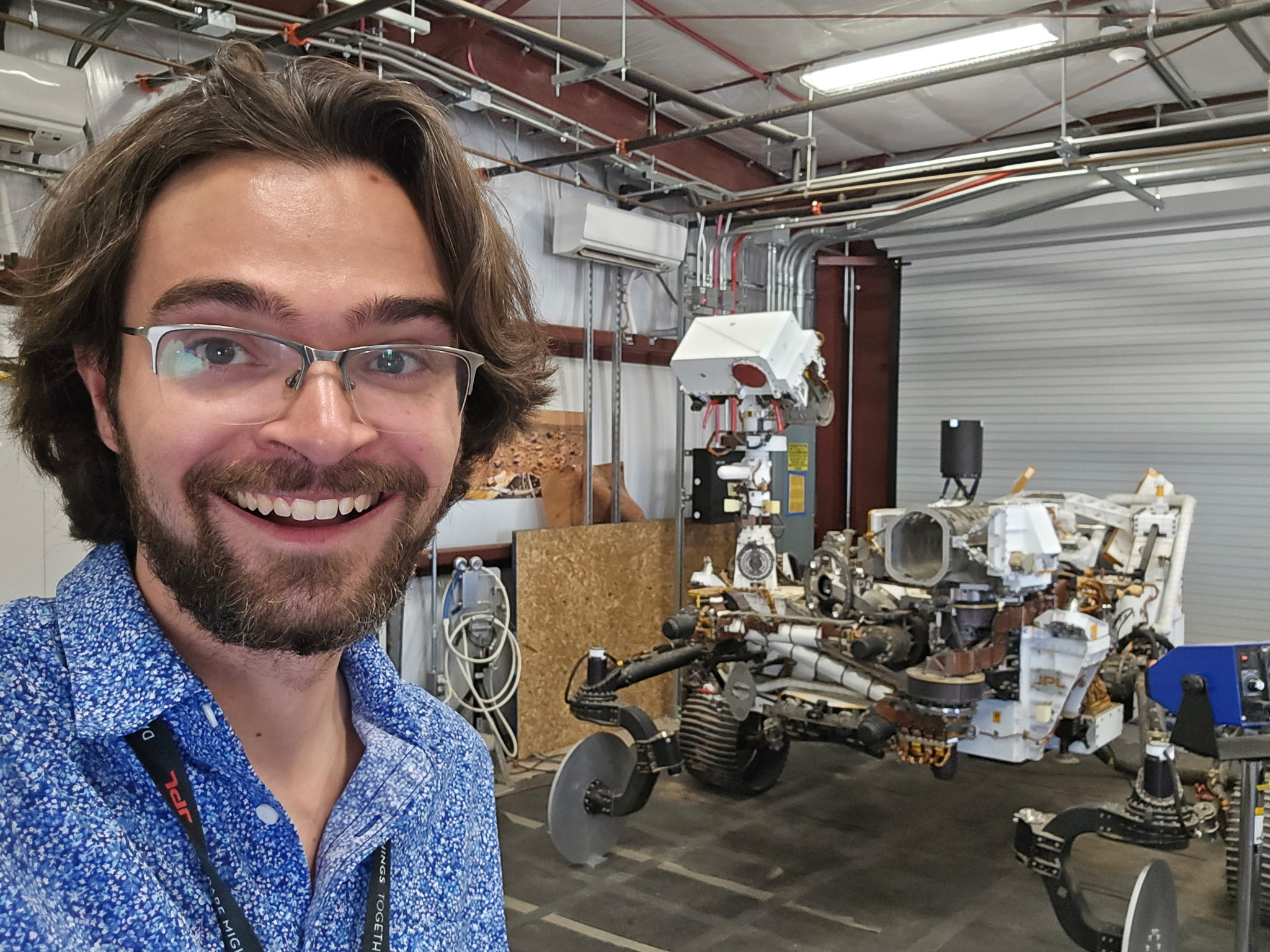
Declan Winship, JPL Postdoctoral Fellow, 389R
JPL organizing gives protection to workers when management fails to step in. I’m a postdoc working on a technology demonstration project, and on my own research as a separate task. On my team, workers regularly need to work for over three consecutive weeks without a day off. While exhausted, we have made multiple costly mistakes which could have been avoided with a less taxing work schedule. As a postdoc, being forced to help on this project delayed my research progress by over half a year, and delayed the advancement of my career as a researcher. Division management was made aware of the situation, but chose not to give anything more than a verbal reprimand to the project management, despite knowing overworking was a habitual problem. Workers on the team also face verbal abuse and hostile work environments that HR has not been able to improve. JPL workers need unions to protect them from volatile leaders who are great researchers and poor managers.

Sam Berndt, Software Systems Engineer, 192G
At JPL, it is we the workers who propose the missions, design and build the spacecraft, and analyze the resulting data. Therefore, we, JPL’s workers, must have a voice in the decisions that affect our organization and our lives. Recent unilateral actions by management are deeply troubling: hundreds of JPLers were laid off without transparency or the chance to say goodbye, and hundreds more were ordered to return to full-time onsite work — many from across the country — or to “voluntarily resign,” which has left me with a sense of distrust for the ethics and decision making of our management. Forming a union will not only enable us to have a say over layoff policies but also help us secure better wages, stronger benefits, and improved working conditions. When we stand together, we can make JPL not only a better place to work, but a stronger & more inclusive institution.

Gary Doran, Data Scientist, 398K
I’m a data scientist in 398K, and I’ve been fortunate to work on a variety of exciting projects with excellent colleagues in the fields of onboard science autonomy, planetary science, and earth science. I have worked at JPL for over 10 years because of the unique projects that I can contribute to, but as the cost of living rises relative to pay, it has become increasingly difficult to comfortably afford housing and other necessities. The additional stress caused by these conditions makes it harder to enjoy my work and perform at my best. I’ve also seen passion for JPL’s mission exploited in other coworkers who have been coerced into tolerating discrimination, disrespect from superiors, unpaid overtime, reduced job security, and other poor conditions in exchange for the unique opportunity to contribute to the exploration of our solar system. We also face many attacks from outside our workplace, which threaten critical funding for peaceful scientific exploration, roll back civil rights, and attempt to dismantle other key protections. With a union, we will have more power to improve our conditions within JPL, bring democracy to our workplace, and join a larger movement to fight for better science funding and rights for workers everywhere.

Rob Nelson, Scientist, 329I
I’m a research scientist at JPL working on algorithm development for OCO-2, OCO-3, and MISR. It’s challenging to plan for the future and successfully operate missions when we face the constant threat of losing talented employees because of the unilateral decisions that JPL makes. For example, reprocessing campaigns for OCO-2/3 are needed to develop and distribute high-quality climate data records and require many months of planning and coordination ahead of time. These plans can be greatly disrupted by unforeseen layoffs and other Lab policy changes. I support forming a union because it will give us a seat at the table when decisions are made that directly impact our ability to continue to improve the data products provided by these missions

Richard Zhang, Electrical Engineer, 337C
As an early-career engineer who first saw JPL as a place that valued workers with diverse situations and backgrounds, unilateral policies like Return to Office have been a reality check. The RTO directive has limited my freedom to work as well as I can. In particular, the flexibility and safety I once saw in working from home is gone. I no longer feel I can spend time with family and loved ones while still meeting the arbitrary rules JPL has set. I now worry about whether JPL will allow me to work remote if a family or personal tragedy arises.
Even though JPL is built on values like collaboration and teamwork, people get left behind.I have seen the administration fail to address the needs of fellow JPLers, including giving up on diversity and inclusion, overlooking accessibility and disability assistance, and doubling down on sweeping RTO policies that fail to account for different situations. I have also seen JPL layoff critical employees whose departure hurt mission success and team cohesion.
Unfortunately, JPL admin’s actions have shown that they are not there for us, but a union will be. That’s why JPL workers need a union to advocate for and represent ourselves.

Shaina Villalobos, Business Administrator, 3918
I spent years working toward a role at JPL, as so many of us did. But the workplace we were promised is becoming harder to recognize. I’ve watched talented colleagues treated like numbers, not people, and seen the remote work flexibility that allows me to care for my 3-year-old suddenly revoked, without input from the very employees most affected. I support forming a union because I believe JPL should truly be the ‘best place to work’. That means protecting severance, ensuring pay equity and fair raises, and preserving flexible work options. A union means stability, dignity, and a voice in the decisions that shape our lives—and we deserve that. All of us.
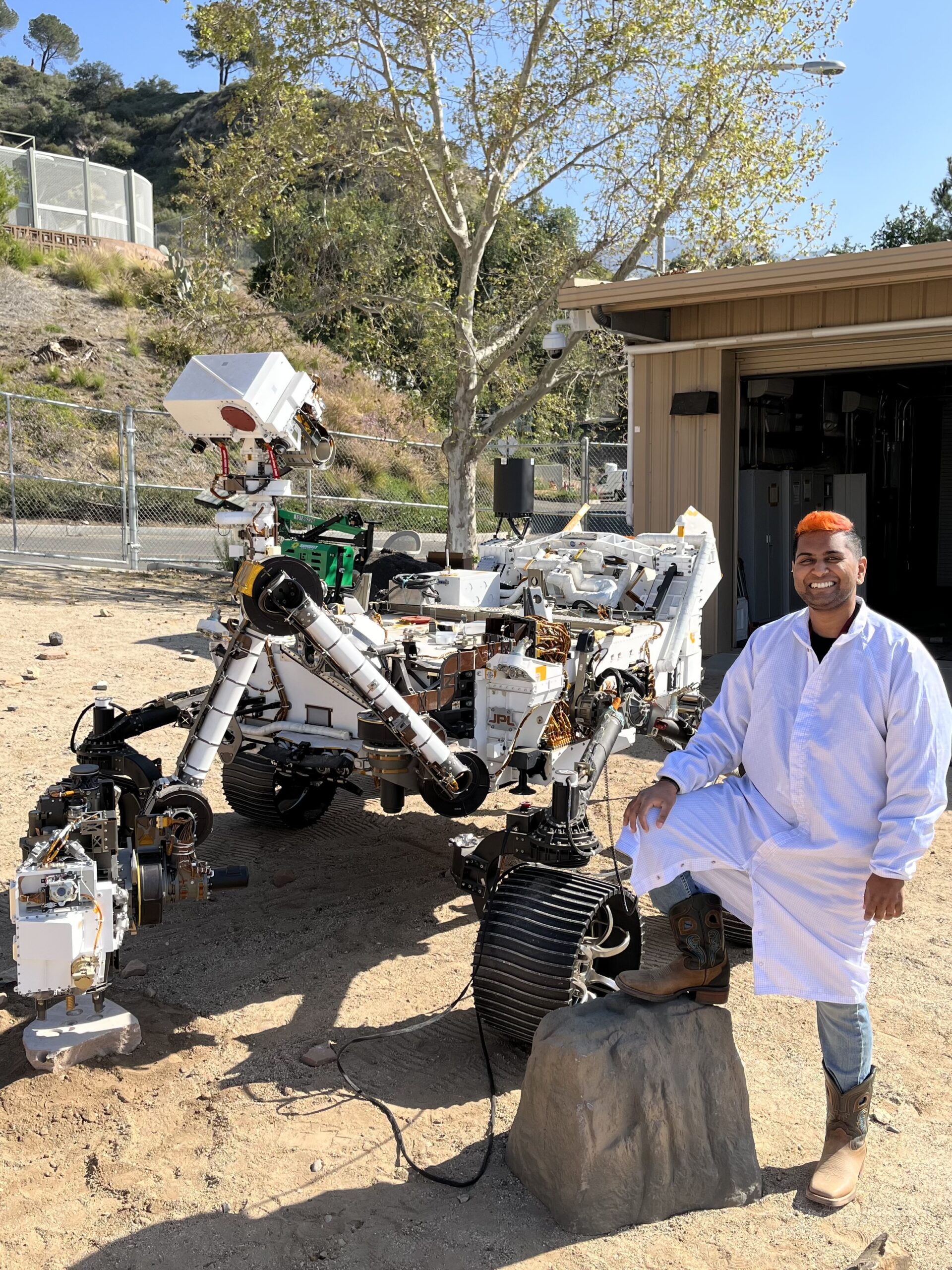
Amila Cooray, Mechatronics Engineer, 352A
JPL is known for its silo culture and there are all kinds of divisions between JPLers-earth vs planetary, hourly vs salary, engineer vs scientist, STEM vs Non-STEM-but at the end of the day, we are all JPLers. I’ve been very lucky at JPL to be involved in some amazing missions and had the opportunity to connect with JPLers all across the lab through my work with ERGs, the Office of Inclusion, and the JPL Cultural Festival. In those moments, I’ve seen what good we can do when JPLers all across the institution work together for each other and for the betterment of the institution. However, those moments are short lived and still divided between many different groups. That’s why I believe in the power of JPL Workers United. It’s the only place where every JPLer can truly come together in an interdisciplinary and intersectional way for one another to make lasting change, such as protecting benefits we already have fought for like improved paid parental leave, and ensuring that core values and offices of the institution are not at the whim of whomever is in charge at the time but agreed upon between the workers and the institution. We have more power together than separately to protect ourselves and the institution that we love.

David Coren, Systems Engineer, 313V
I’m a systems engineer in 313V, and have previously worked in 383D, supporting a number of different projects during my time at JPL, but my greatest professional passion has been working on the Europa Clipper mission since Pre-Phase A as far back as 2012. The passion of JPL’s scientists, engineers, and technologists for our work is what makes JPL such a special place. Over the past couple years, we have lost trust in leadership at JPL, challenging the passion we have for our work. I support forming a union at JPL to ensure that our workplace can continue to thrive and that we are not subject to the whims of others who don’t have our best interests at heart. A unionized workforce at JPL can more strongly stand up to NASA when they attempt to unilaterally modify the prime contract or issue directives that would otherwise violate our collective bargaining agreement. With a union, we can decide together what is important to keep JPL the special place it is, and we can guarantee the workplace doesn’t change overnight without our consent. Above all I support forming a union for the challenges we can’t anticipate right now. I can’t imagine how different the last couple years at JPL would have been if we had previously negotiated a collective bargaining agreement!

Elizabeth Barrett, Operations Systems Engineer, 397D
I enjoy my work at JPL as a science/instrument ops engineer ensuring we maximize the science return we get out of our missions. However, it feels like JPL management has stopped actually listening and responding to employees. As a single parent to a toddler (with an ailing, older dog), I am more productive with a substantially better work-life balance when I can work remotely with flexible work hours (e.g. ability to do school drop-off and pick-up). I feel JPL employees need to form a union in order to have a voice in the room with management and to enshrine protections such as remote and flexible work.

Nick Brown, Network Engineer, 611C
I’m a software engineer for JPL’s Network Engineering team where I’ve supported various missions as well as the lab’s enterprise infrastructure for nine years. During my time at JPL I have had the privilege of collaborating with thousands of talented, passionate individuals dedicated to scientific discovery. JPL and its workers face many challenges – from a high cost-of-living to otherworldly technical problems, and an increasingly anti-science political atmosphere. Recent policies have shown upper management are willing to heap more burdens on an already strained workforce for flimsy and arbitrary reasons. Due to the increased workload my coworkers and I are not able to do our jobs more efficiently and have had our work-life balance disrupted. A JPL worker’s union would advocate for and protect the lab’s most valuable asset: its workers. Negotiating against a draconian RTO mandate, securing key worker benefits, and mitigating the impacts of future layoffs are just a few feasible union objectives that could meaningfully raise morale, which is why I support forming a union for JPL workers.
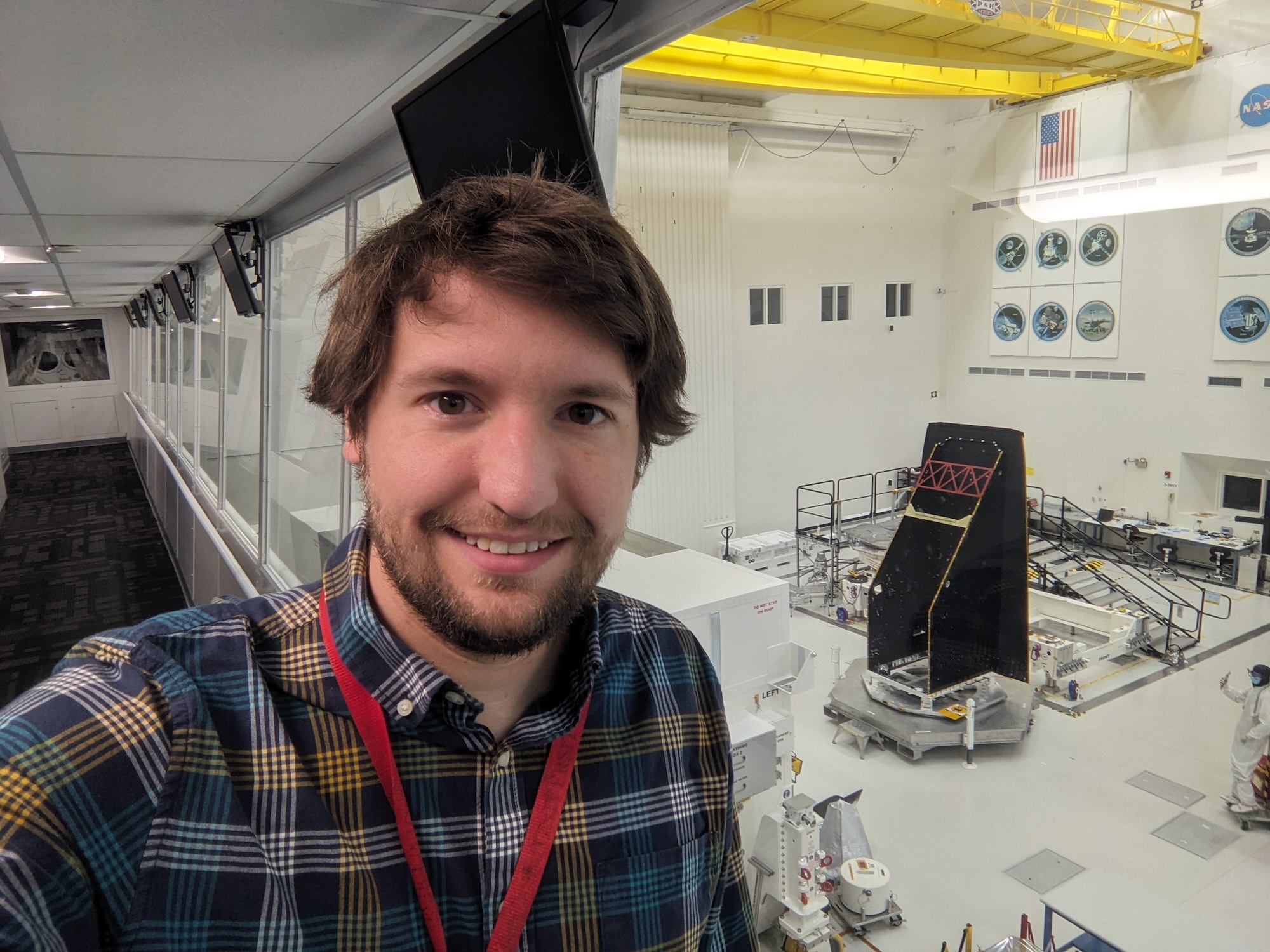
Chris Lawler, Mission Planner, 394C
I’m a mission planner who has been at JPL for 9 years. I truly love the work that I do and am inspired by the problem-solving and dedication of my coworkers every day. That being said, in the past, decisions about the work I was doing that I had no mechanism to weigh in on were so frustrating that I was driven to considering quitting my dream job for a year. While personally in a healthy environment now, it is important to me that workers do not continue to have similar experiences in the future. Forming a union would enable us to have a seat at the table and create more accountability in the workplace. Together, we can create a workplace that lets us get work done instead of getting in our way and that welcomes contributions no matter who they come from

Michael Hauge, Operations Systems Engineer, 397S
While I’ve only been at JPL for 2 years, the lab has been an inspiration to me as long as I can remember. At the same time, I know that there are significant problems at the lab that jeopardize the mission that drew me and many others to JPL as early career employees. I am the only remaining member of the cohort that I was hired with on my project—the others were laid off or left for other opportunities. Many of my friends have left the lab because of the indiscriminate cuts that have decimated the future of so many projects, the high cost of living, and the RTO mandate. These issues make it difficult for me to believe in my future at JPL. Forming JWU-UAW gives me hope, though—that by working together, we can address the problems we see, advocate for ourselves with the power of the collective, and have an active voice in the present and future of the lab.

Nathan Williams, Systems Engineer, 398P
As both a scientist and engineer, I want to make informed decisions in my day-to-day work as well as for my career and life as a whole. Having a contract agreed upon by workers and management will ensure consistency, increase stability, and enable me to more confidently plan ahead for an inspiring and productive career at JPL. Especially in our dynamic environment where things are frequently shifting, either metaphorically or in literal earthquakes, a reliable foundation is critical for keeping us standing and building towards the future.

Ella Seal, Systems Engineer, 5134
In 2018, I got hand, foot, and mouth disease from my son. The fever only lasted a few hours, but I was covered in blisters for two weeks. My group supervisor was understanding and had no problem with me working from home while I recovered–no doctor’s note or HR involvement necessary. I worry that JPL’s elimination of the general telework agreement will make it more challenging to do my work remotely if I have a prolonged illness or injury in the future. We can’t control NASA’s budget, but with a union we can bargain to protect the benefits we have and advocate for improvements like flexible telework policies and greater accessibility. Let’s form a union so we can continue to dare mighty things together!
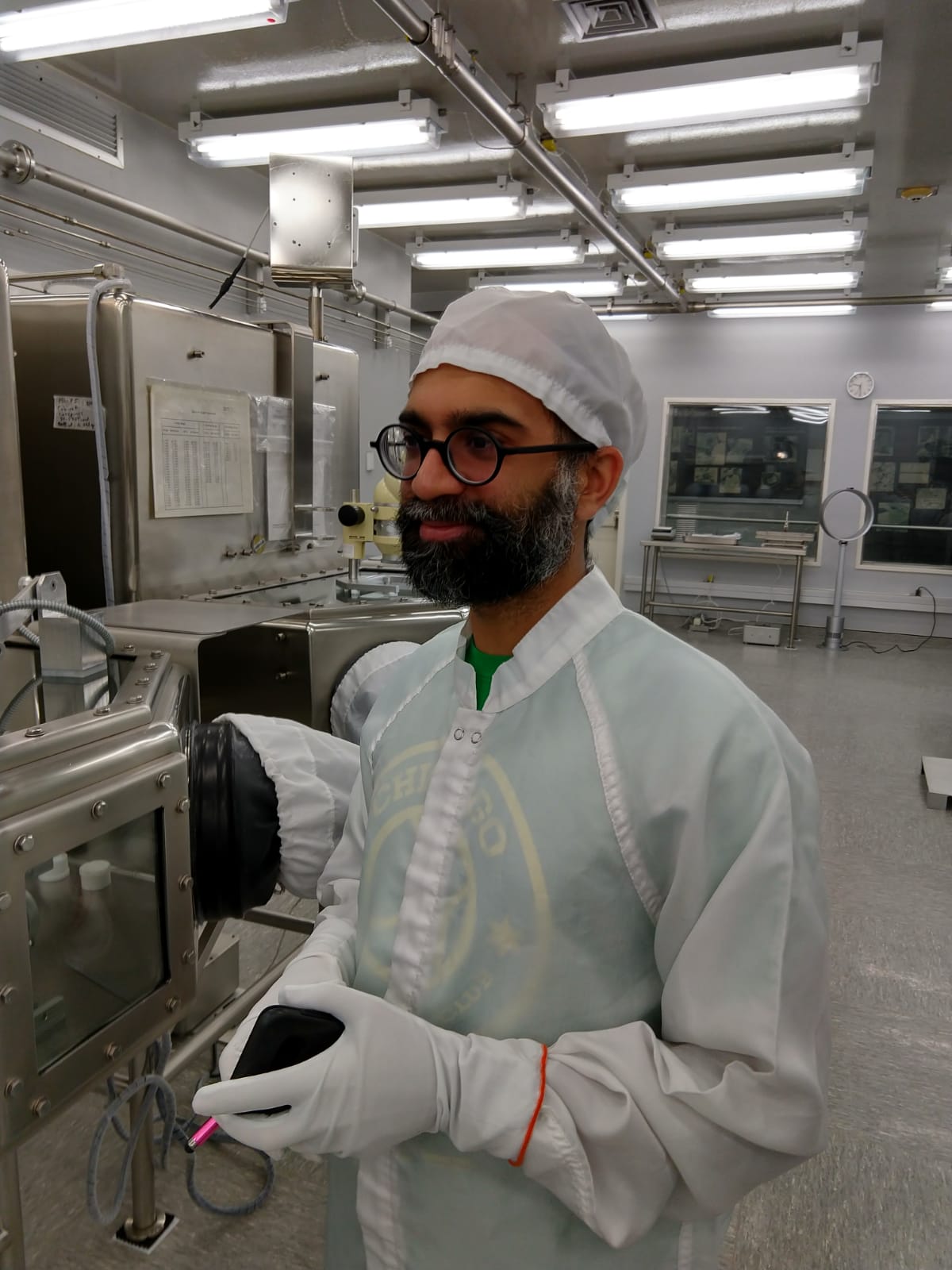
Mohit Melwani Daswani, Scientist, 3226
I’ve been a Research Scientist in the Planetary Interiors and Geophysics group at JPL since 2020 (and a Postdoc from 2018 to 2020) studying ocean worlds and planetary habitability, where I’ve been fortunate to be involved in mission formulation while mentoring over 15 students from all over the world. My work benefits tremendously from JPL’s collaborative environment and partnerships with institutions worldwide. These different perspectives have been essential to developing the modeling framework and software that’s now used by ocean world researchers worldwide. I support forming a union because I’ve seen how uncertainty about job security and working conditions can affect our ability to focus on long-term research projects. Many of my colleagues, including international researchers who bring valuable expertise, worry about their future at JPL. Many are concerned about the stability of their positions, especially given recent uncertainties. Some of my most productive collaborators have started exploring opportunities elsewhere, not because they don’t love the work, but because they need to plan for their families’ futures. A union provides a collective voice to address workplace concerns and ensure that all can contribute happily and to their full potential. We need solidarity to protect the collaborative spirit and excellence that make JPL special, regardless of where we come from.